


【Drawing Bhutan’s Future from the Sky】 Technical Training Program in Japan – Two Weeks of Learning for Bhutan’s Future Drone Leaders
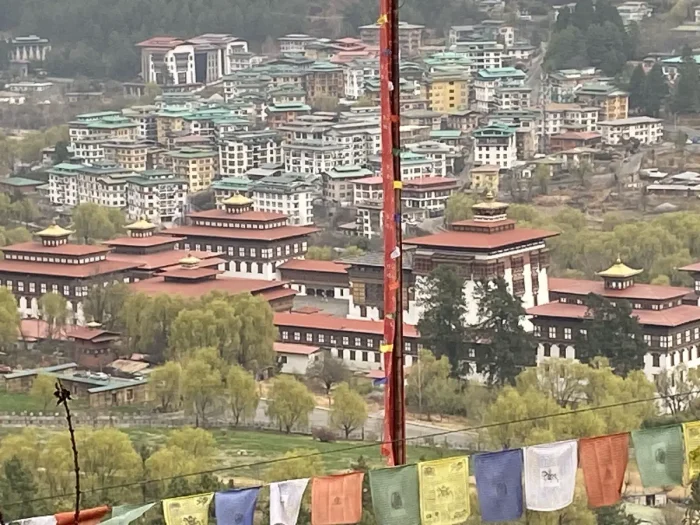
Nestled in the Himalayas, Bhutan faces unique geographical challenges that affect logistics, surveying, disaster response, and access to remote communities. Against this backdrop, expectations for drone technology as a tool for addressing social and economic challenges continue to grow.
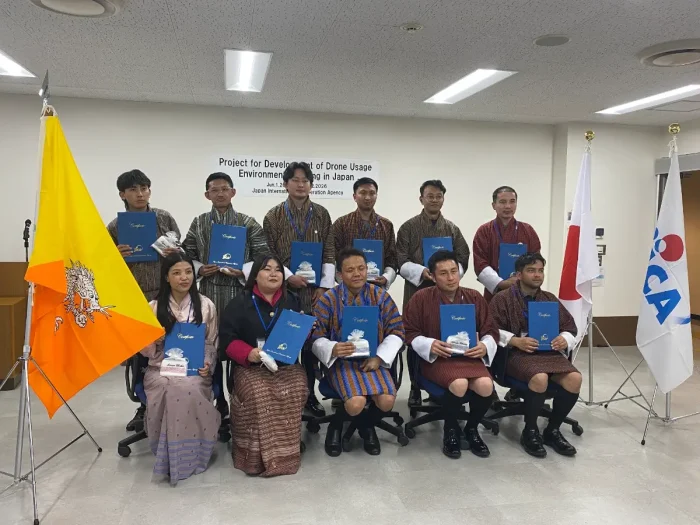
As part of the JICA Technical Cooperation Project, “Project for the Development of an Enabling Environment for Drone Utilization in Bhutan,” a technical training program in Japan was conducted for Bhutanese counterparts from relevant government agencies. The program served as an important step toward future institutional development, capacity development, and demonstration activities planned under the project.
Participants included officials from the Ministry of Infrastructure and Transport (MoIT), the Bhutan Civil Aviation Authority (BCAA), and other government organizations involved in the development of Bhutan’s drone ecosystem. Over the course of two weeks, they explored Japan’s drone industry, regulatory framework, operational practices, safety management systems, and examples of real-world implementation, gaining insights that will support the development of an enabling environment for the safe and sustainable utilization of drones in Bhutan.
Understanding Japan’s Drone Ecosystem through Japan Drone
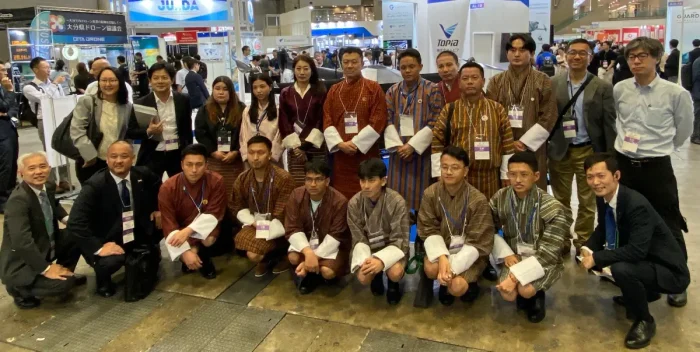
One of the highlights of the training program was participation in Japan Drone, one of the country’s largest drone exhibitions and conferences.
The event brought together a wide range of technologies and services covering logistics, infrastructure inspection, disaster management, surveying, agriculture, and many other sectors. Participants had the opportunity not only to observe aircraft and solutions, but also to learn about the broader ecosystem supporting drone operations, including Unmanned Traffic Management (UTM), Remote ID, safety management, regulatory frameworks, and capacity development initiatives.
Attending the exhibition after several days of classroom lectures, the participants appeared to experience a significant culture shock, heightened by the overwhelming sight of countless drones on display. During the tour, some participants noted, “We are beginning to see how Japan’s drone industry operates and how the private sector thrives within the regulatory framework established by the government.” This hands-on experience clearly provided a positive stimulus. Witnessing numerous technologies in action likely served as a valuable opportunity for each participant to envision practical solutions for their own country and conceptualize the future institutional frameworks Bhutan should aspire to build.
A special session focusing on Bhutan was also held during the event, bringing together representatives from JICA, Bhutanese government agencies, and members of the project JV. The session provided an opportunity to discuss the future potential of drone utilization in Bhutan and to share perspectives with stakeholders from across the Japanese drone community.
As the organizer of Japan Drone, JUIDA supported the program by facilitating networking opportunities and helping participants gain a comprehensive understanding of Japan’s drone ecosystem.
Learning from Japan’s Regulatory and Policy Frameworks
The training program also included meetings with Japanese government ministries responsible for drone-related policy and regulatory development.
Through presentations and discussions, participants learned about aviation safety regulations, operational frameworks, industrial promotion measures, spectrum management, and examples of drone applications in agriculture. These exchanges provided valuable insight into how Japan has developed its current regulatory environment and governance systems over time.
Institutional development is one of the key pillars of the project. The discussions encouraged participants to reflect on what kinds of systems, regulations, and organizational structures may be needed to support the safe and sustainable use of drones in Bhutan.
From Testing to Practical Implementation
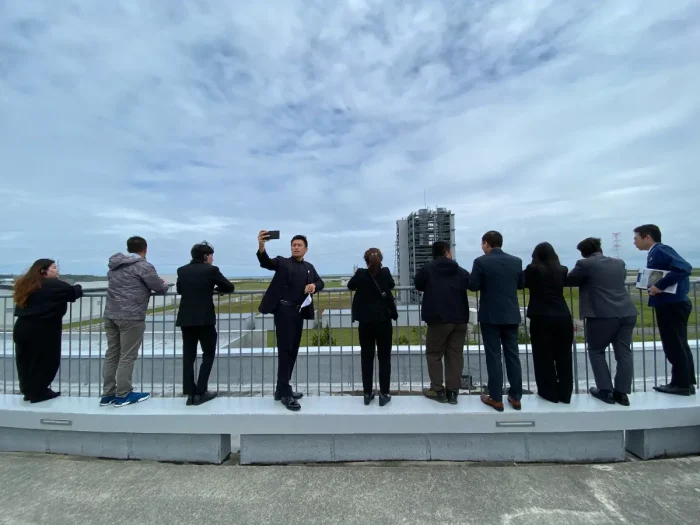
The participants also visited Fukushima Robot Test Field (RTF), one of the world’s leading facilities for the testing and development of drones and robotic technologies.
Through site visits and technical briefings, they gained a deeper understanding of how technologies are evaluated, verified, and prepared for deployment in society. Beyond technological innovation itself, the visit highlighted the importance of testing, validation, and safety assurance processes in enabling practical implementation.
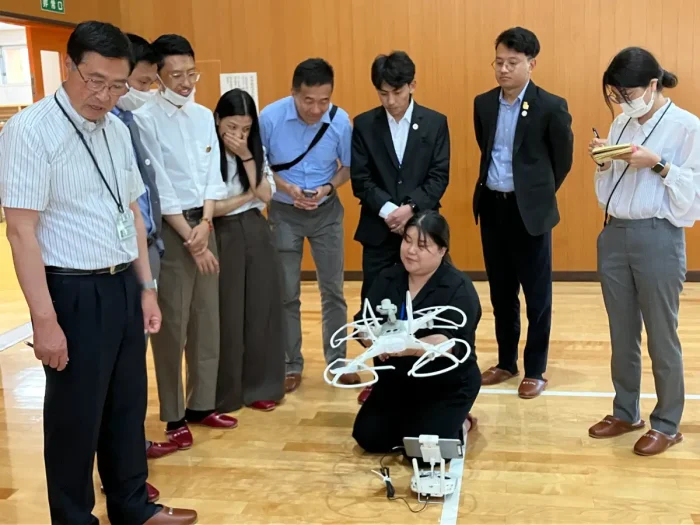
The program also included observations of regional initiatives in Oita Prefecture, where drones are being utilized to address local challenges in areas such as disaster management, logistics, and workforce development.
Learning from regions that face geographical conditions similar to those found in parts of Bhutan provided valuable perspectives on how drone technology can be integrated into local communities and public services.
Learning from Japanese Society and Culture
For many participants, this was their first visit to Japan.
In addition to technical and institutional learning, the program provided opportunities to experience Japanese society and culture firsthand.
Some participants saw the Pacific Ocean for the first time while traveling to Fukushima, expressing admiration for its vastness. Others were impressed by the speed and comfort of the Shinkansen, the efficiency of public transportation systems, the vibrancy of Japan’s urban centers, and the country’s rich cultural heritage reflected in its historic temples and local traditions.
These experiences offered more than cultural exposure. They also provided valuable insight into the social foundations and public systems that support technological innovation and effective governance.
The program therefore became not only an opportunity to learn about drones, but also a meaningful occasion for strengthening mutual understanding between Bhutan and Japan.

Knowledge for Bhutan’s Future
The training program was not intended simply as an opportunity to observe and collect information.
Drawing on the knowledge gained through lectures, discussions, and site visits, participants explored future directions for institutional development, capacity development, and drone utilization in Bhutan. They also worked on action plans that will contribute to future project activities.
A key takeaway was the recognition that successful development does not come from directly replicating another country’s systems. Rather, Bhutan’s future drone ecosystem must be built in a way that reflects its own social context, geography, and national priorities.

Looking Ahead
The training program was made possible through months of preparation and coordination among JICA, Bhutanese government counterparts, and the Joint Venture implementing the project, comprising Aero Toyota Co., Ltd., the Japan UAS Industrial Development Association (JUIDA), and Global Environmental Science Co., Ltd.
As a result, participants were able to gain a comprehensive understanding of Japan’s experience in drone regulation, technology, operations, and practical implementation, bringing back valuable knowledge to their respective organizations.
This training program is not the destination of the project, but rather the beginning of its next phase. Future activities in Bhutan will include further institutional development, capacity development activities, and demonstration activities.
The trust built and knowledge shared through this training program will serve as an important foundation for future collaboration. It is expected that the lessons learned in Japan will contribute to tangible outcomes in Bhutan and create new opportunities for cooperation between stakeholders in both countries.
JUIDA and the other JV members will continue working closely with Bhutanese counterparts to connect the knowledge gained through this training program with practical activities on the ground, supporting both institutional development and practical implementation toward the establishment of a sustainable drone ecosystem in Bhutan.
- Work Name: The Project for Development of Drone Usage Environment in Bhutan
- Performance Period: October 10, 2025 – February 15, 2028
- Implementation Structure: JV by Aero Toyota Corporation (Representative Member), Japan UAS Industrial Development Association (JUIDA), and Earth System Science Co., Ltd.
■For more information, please contact:
JUIDA International Relations and Development:ohzora@uas-japan.org